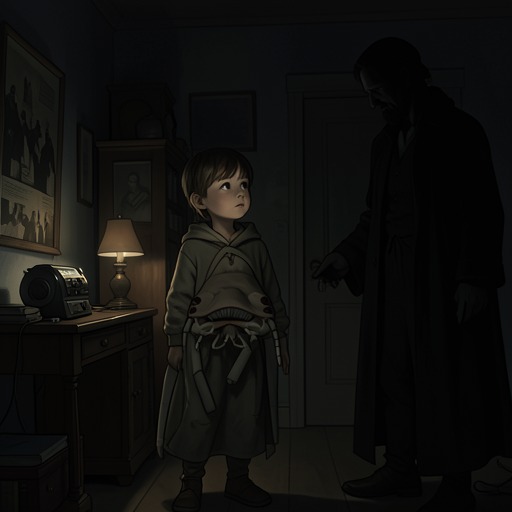
The Ms. Veal incident
I'm Thinking of Ending ThingsThe Ms. Veal incident is a childhood encounter that turns a routine visit into a lasting crisis of trust for The narrator. A private exchange, delivered while The narrator is sick and alone with Ms. Veal, makes goodness seem tied to the possibility of losing home and family. The later illness of The narrator’s mother deepens the child’s suspicion, while the uncertainty surrounding both events becomes part of a broader conviction that other people remain unknowable.
The Visit and Its Setting
Ms. Veal comes to the family home to collect bacon fat that The narrator’s mother has saved in the freezer. Ms. Veal uses the fat to make Yorkshire pudding but does not cook bacon herself; the two women sometimes meet or visit one another to exchange it. On this occasion, The narrator’s mother invites her over. The narrator is home from school sick, still in pajamas, and eating toast while the adults share tea and Ms. Veal’s oatmeal cookies.
The domestic routine places The narrator at the edge of an adult conversation. The narrator does not want to sit at the table with Ms. Veal and receives no greeting or acknowledgment from her at first. The encounter changes when The narrator’s mother leaves the room for a reason The narrator cannot later recall. The brief absence removes the familiar adult presence and leaves the sick child alone with a visitor The narrator scarcely knows.
The Private Exchange
Once alone with The narrator, Ms. Veal stops what she is doing and asks the child to decide whether they are good or bad. She makes goodness conditional on not giving up, then links the child’s answer to whether they may have a cookie. The alternative she raises is that a bad child might have to come live with her instead of remaining in the family home with their parents.
The narrator cannot understand what Ms. Veal means or formulate an answer. The question comes from an unfamiliar adult and carries a consequence the child cannot assess or control. The narrator recalls being petrified and unable to respond. Ms. Veal also tells The narrator not to be so shy and says that the child has to get over it, extending the encounter from a strange test of character to a judgment about how The narrator behaves.
When The narrator’s mother returns, Ms. Veal resumes transferring bacon fat between the jars and gives no indication that the private exchange has taken place. That shift back to the ordinary task leaves the unsettling conversation unacknowledged in front of the adult who might otherwise have clarified or interrupted it. The memory preserves the contrast between the alarming exchange and Ms. Veal’s return to the practical business of the visit, without establishing what Ms. Veal intended.
The Illness and the Child’s Conclusion
That night, The narrator’s mother becomes ill with what The narrator identifies as food poisoning. The narrator hears her suffering through the night and later connects it to the cookies Ms. Veal brought. The narrator reasons that the mother and child ate the same dinner, but only the mother ate a cookie; The narrator was not sick and believes the mother had recovered by morning. The narrator’s mother describes the episode as a fluke stomach problem, but The narrator rejects that explanation and remains convinced that the cookie caused it.
The account distinguishes the child’s certainty from what can be established. The narrator’s belief is intense, but the memory offers no independent confirmation that the cookie caused the illness or that Ms. Veal meant to harm anyone. That gap matters: the suspicion follows an encounter in which Ms. Veal’s intentions already seemed impossible for the child to read. The illness does not resolve the earlier exchange; instead, it gives the child another reason to distrust the harmless appearance of an ordinary visit.
Lasting Meaning of the Memory
The narrator draws from the incident a broad and troubling conclusion: people cannot fully know what others think or why they act as they do. Relationships may form and endure despite that limit, the narrator reflects, because people must still choose how to behave and what to say. Thought, by contrast, is presented as private and impossible to verify from outside. The memory therefore becomes more than an account of fear; it supplies an early instance of the uncertainty that The narrator later treats as a persistent feature of human connection.
The question about being good or bad returns in the narrator’s recollection, but the adult perspective does not produce a settled answer. What frightens The narrator now is not simply that a child once could not answer Ms. Veal, but that the answer remains unknown. This unresolved return gives the incident its lasting force: the visit began with a demand for a simple moral distinction, yet the memory ends by exposing how little certainty such a distinction can provide about a person, including oneself.